



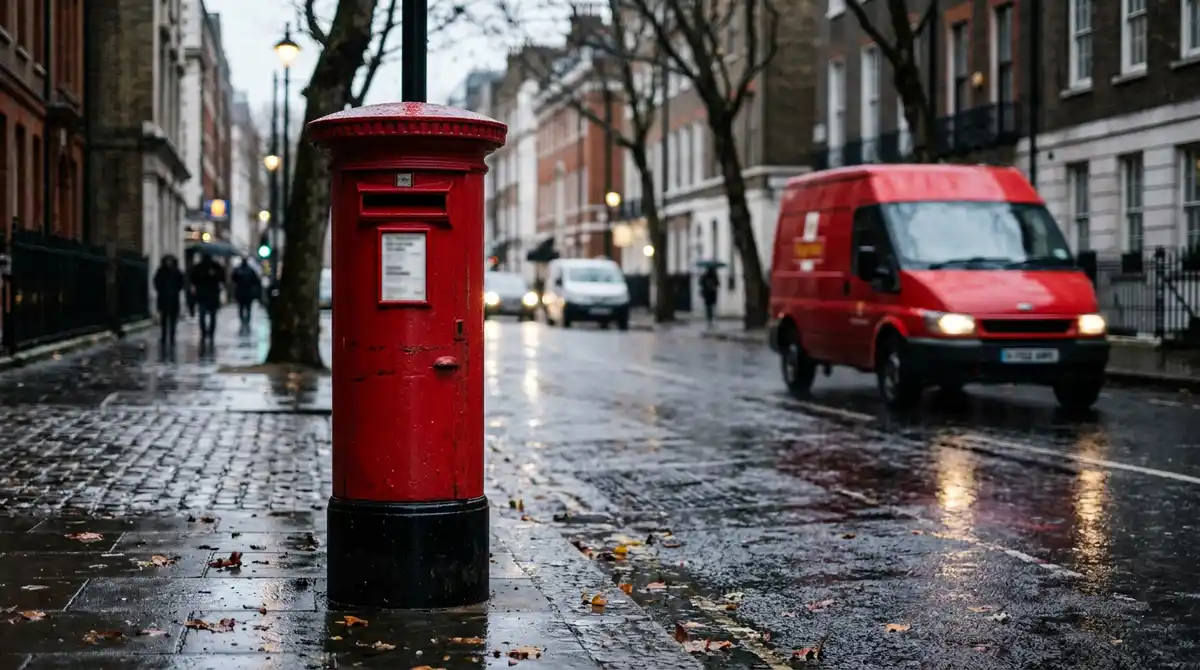
Royal Mail is to get its third chief executive in under three years, with finance chief Paul Ablin taking charge in January as the postal service continues to miss its delivery targets and its owner warns that it is competing on unequal terms in the parcels market.
International Distribution Services (IDS), the Royal Mail parent owned by Czech billionaire Daniel Křetínský’s EP Group, said on Thursday that current Royal Mail chief executive Alistair Cochrane will retire at the end of 2026. Mr Ablin, chief financial officer of both IDS and Royal Mail, takes over on 1 January 2027, Reuters reported. Mr Cochrane will join the IDS board as an executive director.
Who is Paul Ablin?
Mr Ablin joined IDS as finance chief in spring 2025 from Virgin Media O2. According to Business Chief, he spent more than 20 years in finance roles at easyJet, Marks & Spencer, SABMiller and KPMG. His 11 years at easyJet included a spell as chief operating officer of easyJet Holidays, giving him operational experience beyond the finance function.
IDS chief executive Martin Seidenberg said: “I look forward to continuing to work closely with Paul Ablin as Royal Mail CEO as we deliver our plans to successfully transform Royal Mail for the benefit of our customers.”
The appointment continues a period of rapid turnover at the top. Emma Gilthorpe joined from Heathrow as chief executive in May 2024 and left just over a year later, weeks after EP Group completed its takeover of IDS. Mr Cochrane, a former Whistl chief executive, stepped up from chief operating officer and has run the business since.
Delivery targets still out of reach
The leadership change was announced alongside half-year results and quarterly service figures that showed performance moving in the wrong direction. Royal Mail delivered 82.5% of first-class mail the next working day in the second quarter, against a regulatory target of 90%. Second-class delivery within three working days came in at 87.2%, short of a 95% target.
Ofcom, the communications regulator, has fined Royal Mail more than £37m for missing its annual delivery targets over three years. An Ofcom spokesperson said the company’s latest quarterly data indicated it was on track to restore first-class performance by April, but that “it must go further and faster on second class performance if it’s going to turn things around by spring”, the Press Association reported.
In October Royal Mail began implementing reforms to the universal service obligation, including scrapping second-class post on Saturdays, and announced plans to cut up to 2,500 jobs by the end of 2027. Mr Cochrane has described the overhaul as necessary. “This is a once-in-a-generation change which must be made to reflect the changing posting habits of businesses and customers,” he said.
Parcels up, letters down
The financial picture reflects the long shift from letters to parcels. Royal Mail’s revenue rose 3.9% to £4.13bn in the six months to 27 September. Parcel volumes grew 8% to 734 million, while addressed letter volumes fell 8%. Across the wider group, which also owns the European parcels business GLS, revenue rose 6.3% to £6.85bn.
IDS warned that Royal Mail’s second-half performance would be hit by a delay to some mail price increases that had been due to take effect in October.
The company also renewed its complaint about competition in parcels, arguing that it faces rivals who do not employ staff on the same terms. “We welcome the Government’s plans to tackle bogus self-employment and will continue to push for strong and enforceable standards across the industry,” Mr Seidenberg said.
The Communication Workers Union struck a starker note. “We are calling for a summit between stakeholders and the Government to address the ticking timebomb that is Royal Mail,” said Dave Ward, the union’s general secretary.
What it means for UK readers
For households and small businesses, the most visible issues are price and reliability. A first-class stamp now costs £1.80, according to Business Chief, more than double the price of six years ago, while roughly one first-class letter in six still arrives late. The new chief executive’s first task will be convincing the regulator, and customers, that the reformed delivery model can hit its targets.
For Royal Mail’s workforce, the appointment of a finance chief to the top job is likely to be read as a signal that cost control and the job reduction programme will remain central, even as the company argues for tougher rules on rivals’ employment models.
What happens next
Mr Ablin takes over on 1 January, just after the Christmas peak, which is traditionally the heaviest period for parcels. IDS did not name a replacement finance chief. Ofcom’s April deadline for restoring performance, and the government’s promised action on self-employment in delivery, are the two milestones most likely to define his first months in charge.